
An Especially Flawed Relationship
There have been valid questions about the Transatlantic Relationship for years.

I spent much of 2010 working in Helmand in Afghanistan, based at FOB (Forward Operating Base) Lashkar Gah - where the British-led brigade in the province worked with its Danish and Estonian counterparts as part of the wider NATO deployment. We did it because the United States had made an Article 5 declaration in the light of the 9/11 attacks. One of the features of life in Lashkar Gah were memorial services for fallen soldiers, where we would gather in the parade ground, hear the name and circumstances of the dead, observe a minute’s silence, listen to the last post and reflect on young lives lost, lost specifically because we had decided to support our American ally in the most challenging and dangerous setting. 2009 and 2010 were the deadliest year of the Afghanistan campaign and Helmand was the deadliest province.
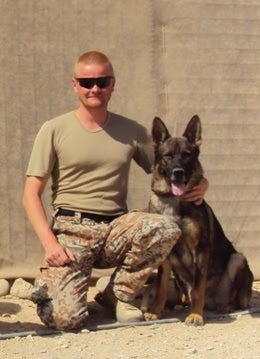
For some reason, among many such ceremonies, one stuck with me more than any other and I can remember it clearly now as if it had happened yesterday. On 13 June 2010, a Danish armoured personnel carrier was hit by a roadside bomb. Four soldiers were injured. A fifth was killed: Martin Kristiansen, who was with his detection dog Loke. Loke also died. There is a certain special bond that exists between dog handlers and their canine companions in challenging and extreme environments. For me then, and now, the thought of the two of them losing their lives in the same instant is particularly poignant.
Britain alone lost more than 100 casualties in each of those years, so these ceremonies were frequent. And we would often be honouring Danish dead: the Danes had responsibility for a particularly challenging part of Helmand called Gereshk and saw 44 of their soldiers fall.
Both for Britain and Denmark (and perhaps even more for Estonia) we knew that our ability to influence the American strategy in Afghanistan was pretty limited. Some might argue that (as Rory Stewart did at that time) it made no sense for western allies to put their forces on the ground in Afghanistan to support a failing US strategy. The argument made by America’s closest and most stalwart allies, such as Denmark, Britain and Estonia, was that we gained the ability to influence by showing our willingness to support America where it was most difficult, not by sniping from the sidelines but by showing that we were there, in the line of fire. Part of that required NATO countries to continue to make a public defence of their deployments even as public opinion was souring on the losses involved. Again, they did that because being an ally was important, not because there was any political dividend for the countries involved. As a Danish military spokesman said at the time of Kristiansen’s death:
The loss of Martin Kristiansen hits us hard, but it does not slow us down, and it does not stop us. We will straighten our backs again and continue the fight against the visible enemies and against the bombs that threaten us and the Afghan population. We owe that to Martin Kristiansen. We continue forward towards the goal.
Donald Trump cares nothing for any of this and has claimed that the United States’s allies in Afghanistan “stayed a little back, a little off the front lines”. It is true that some countries (not those in Helmand) introduced caveats around their military operations in Afghanistan, such as Germany, which restricted where its soldiers could operate and what they could do, including at certain points banning them from offensive operations (such as identifying and destroying Taliban positions). With the benefit of hindsight, in which Donald Trump negotiated a surrender deal with the Taliban and Joseph Biden implemented it largely unchanged without consulting his European allies, the decision to limit the scale of support to the NATO mission might seem a wise precaution. Why lose hundreds of troops to an ally that doesn’t value your contribution or advice? And even with its caveats in place, Germany’s forces were not “off the front lines”: 62 died in Afghanistan, the majority of those in combat.
I remember very clearly the anxieties and concerns around the US prosecution of its campaign in Afghanistan and the sense that other NATO partners, whether big or small, were limited in their ability to influence the juggernaut towards a better approach. A relationship where an ally cannot persuade their partner to change an approach that isn’t working doesn’t seem to be a special relationship. It might better be described as an especially flawed one. There were always good arguments for not being overly dependent on a single ally, which clearly limits sovereignty (ironically, those that sought to take the UK out of the EU on grounds of sovereignty seem untroubled by limitations on our sovereignty when it comes to the United States). One of those is losing our servicemen and women in foreign wars of questionable value over which we have little influence. I wonder how the families of the 500 Australian soldiers that died in the Vietnam War felt about their sacrifices? I wonder now how the families of Danish soldiers lost in Afghanistan feel about theirs as President Trump threatens their territory?
This post is written in memory of the many NATO soldiers, including Americans, that gave their lives in an ultimately failed attempt to bring democracy and stability to Afghanistan.